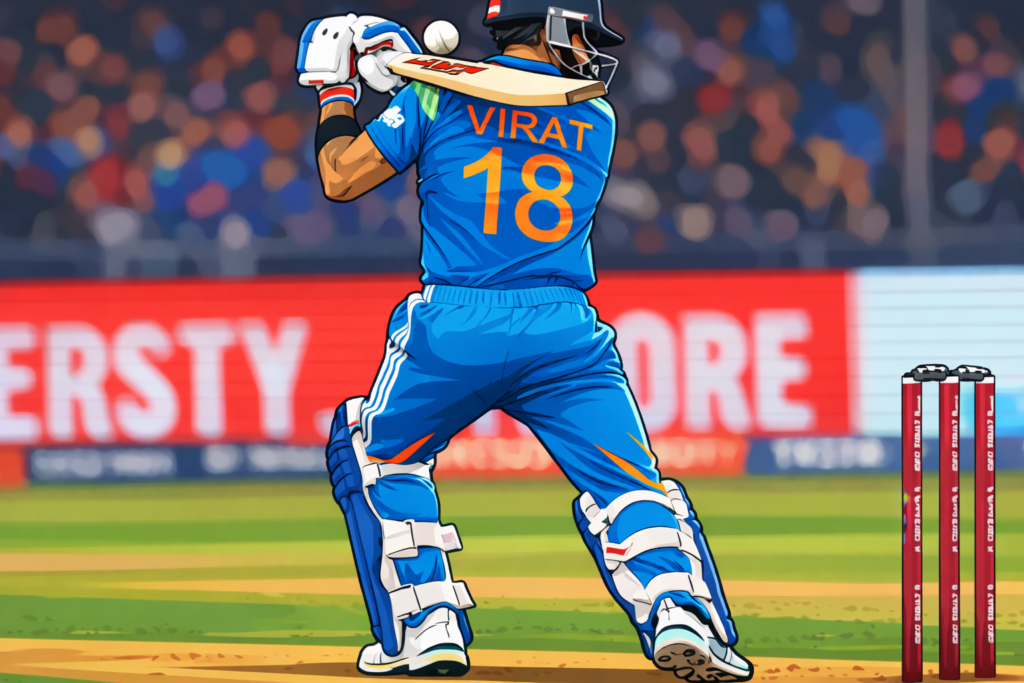

The India vs New Zealand 3rd ODI at Indore has turned into a tense and absorbing contest far earlier than expected. What was billed as a high-scoring series decider at the Holkar Stadium has instead delivered early drama, with KL Rahul and Shreyas Iyer dismissed in quick succession, leaving Virat Kohli stranded at one end and searching for support as India attempt to steady their innings.
With the series locked and pride on the line, this match has already underlined why India–New Zealand encounters rarely follow the script. On a surface known for batting-friendly conditions, New Zealand’s disciplined bowling has exposed cracks in India’s middle order, putting pressure on Kohli to once again play the role of the stabiliser.
A Decider That Shifted Momentum Within the First Hour
Series deciders are usually about fine margins, but the Indore ODI saw those margins widen quickly. India’s innings never truly settled after the early breakthroughs, and the energy on the field reflected that shift.
New Zealand arrived with a clear plan:
- Attack early
- Build pressure through dot balls
- Target India’s middle order before it could settle
Live match developments suggest that this plan worked perfectly in the opening phase, forcing India into a defensive mindset much sooner than anticipated.
Indore Pitch Report: A Surface That Demanded Respect
The Holkar Stadium has built a reputation for run-fests, often rewarding aggressive stroke play and punishing bowlers who miss their lengths. However, in this match, the pitch offered something extra early on.
Based on live match observations:
- There was slight seam movement in the first few overs
- The bounce, while true, was not completely uniform
- Bowlers who hit the deck hard were rewarded
India’s batters, expecting a flatter surface, appeared surprised by the early assistance available to New Zealand’s pacers.
KL Rahul’s Exit: A Blow to India’s Stability
KL Rahul’s role in the Indian ODI setup is clear: provide stability, especially when early wickets fall. Unfortunately for India, his dismissal came at a moment when consolidation was essential.
From the live match context:
- Rahul struggled to rotate strike freely
- New Zealand’s bowlers crowded him with tight fields
- A probing delivery forced a false shot
His departure disrupted India’s planned batting order and exposed the middle order far too early in a high-pressure match.
Shreyas Iyer’s Quick Dismissal Raises Alarm Bells
If Rahul’s wicket unsettled India, Shreyas Iyer’s dismissal deepened the concern.
Iyer is typically a reliable option against pace and spin, especially on Indian surfaces. However, in this match:
- He found scoring difficult against disciplined bowling
- Dot balls began to accumulate
- Pressure led to an ill-timed shot
Losing both Rahul and Iyer in quick succession left India in a precarious position, with momentum firmly swinging New Zealand’s way.
Virat Kohli Stands Firm Amid the Chaos
As wickets fell, Virat Kohli remained composed, fully aware that his role had changed from aggressor to anchor.
Live visuals and commentary indicate that Kohli:
- Focused heavily on singles and strike rotation
- Resisted the temptation to attack early
- Took extra time to settle at the crease
However, cricket remains a partnership-driven game, and Kohli’s challenge has been compounded by the lack of consistent support from the other end.
Kohli’s Battle: Against Bowlers and Circumstance
This innings is testing Kohli on multiple fronts:
- Quality bowling
- Scoreboard pressure
- Series-decider expectations
New Zealand’s bowlers have been content to bowl defensively to him, confident that pressure from the other end might force an error. Kohli, in response, has chosen patience over flamboyance, understanding the value of time spent at the crease.
New Zealand’s Bowling Discipline Sets the Tone
One of the standout features of this match has been New Zealand’s bowling execution.
Live match analysis highlights:
- Consistent lines just outside off stump
- Minimal loose deliveries
- Smart use of short-of-a-length balls
- Effective field placements cutting off singles
Rather than hunting wickets recklessly, New Zealand have allowed pressure to build naturally, a strategy that has paid off handsomely.
Early Wickets and the Mental Shift
The psychological impact of early wickets cannot be overstated.
As per live match cues:
- India’s scoring rate dipped noticeably after the collapse
- Batters became cautious
- New Zealand’s fielders grew more animated
This mental shift often decides close contests, and New Zealand have clearly sensed India’s vulnerability.
Middle Overs: The Phase That Will Decide India’s Fate
With the powerplay behind them, India now face their biggest challenge in the middle overs.
This phase demands:
- Partnerships over individual heroics
- Strike rotation to avoid stagnation
- Capitalising on rare loose deliveries
Live scoring patterns suggest that if India fail to stabilise here, they risk being restricted to a below-par total despite the batting-friendly reputation of the venue.
Pressure on the Lower Middle Order
With Rahul and Iyer gone, the responsibility shifts to India’s lower middle order to:
- Stay with Kohli
- Absorb pressure
- Provide calculated aggression when required
New batters walking in are immediately tested, with New Zealand refusing to release pressure through easy runs.
Expectations vs Reality at Indore
Pre-match narratives revolved around:
- A potential 300-plus total
- Batting dominance
- Bowlers playing a secondary role
The live match situation has completely rewritten that script, reinforcing cricket’s unpredictability and the importance of adaptability.
Crowd Mood: From Anticipation to Anxiety
The Indore crowd arrived expecting entertainment, but early wickets altered the atmosphere.
Live crowd reactions indicate:
- Initial buzz turning into nervous murmurs
- Loud applause for every Kohli boundary
- Visible tension as wickets fell
The home crowd’s energy remains supportive, but anxiety is clearly present.
Expert Commentary and Live Analysis
Experts following the match live have pointed out:
- India’s need to respect good bowling
- New Zealand’s impressive tactical discipline
- The importance of partnerships in saving the innings
Several analysts believe that a single strong partnership could still change the complexion of the match.
What India Need from This Point On
From the current live scenario, India’s roadmap is clear but demanding:
- Kohli must bat deep
- One batter must commit to staying with him
- Risk-taking must be delayed until a platform is built
- Final overs need a calculated acceleration
Given the nature of the pitch, a late surge remains possible if wickets are preserved.
New Zealand’s Next Move: Sustain Pressure
For New Zealand, the approach remains unchanged:
- Keep bowling to plans
- Avoid chasing wickets unnecessarily
- Force India to take risks
Their field settings suggest confidence that pressure will eventually yield rewards.
Series Context: Why Every Run Matters
With the series on the line:
- A modest Indian total could tilt the match heavily towards New Zealand
- A recovery could still keep India competitive
This match is now as much about mental resilience as technical skill.
Kohli and High-Pressure Rescues: A Familiar Story
Indian fans have seen this script before.
Kohli has previously:
- Anchored innings after collapses
- Managed pressure in series deciders
- Delivered defining performances when support was minimal
As long as he remains at the crease, India’s hopes are alive.
Tactical Tweaks India Might Consider
Depending on match progression, India could:
- Promote a hitter to counterattack
- Target specific bowlers for release shots
- Focus heavily on running between wickets
Such tactical adjustments will be visible in live play and could influence the final total.
How Conditions May Change as the Match Progresses
As the ball ages:
- Movement is likely to reduce
- Batting could become easier
- Shot-making may improve
India’s immediate challenge is to survive until conditions begin to favour batters again.
Reading the Live Score Beyond Numbers
The live scorecard only tells part of the story.
Key indicators to watch include:
- Dot-ball percentage
- Partnership lengths
- Body language of batters and bowlers
These subtle elements often reveal which side holds the upper hand.
What the Next Phase Could Decide
The next hour of play is critical:
- A partnership could swing momentum back to India
- Another wicket could push India into deeper trouble
Every over now feels magnified in importance.
Conclusion
The India vs New Zealand 3rd ODI at Indore has unfolded into a compelling battle far earlier than expected. With KL Rahul and Shreyas Iyer dismissed quickly, Virat Kohli is once again carrying the burden of stability, attempting to anchor India’s innings in a high-pressure series decider.
Despite the early setbacks, the match remains finely poised. On a ground capable of late acceleration, India still have a window of opportunity—provided they can build partnerships and manage pressure intelligently.
As live updates continue to shape the narrative, one truth stands out: this decider is no longer about expectations or reputations. It is about composure, execution, and the ability to respond when plans fall apart. The coming overs will determine whether India recover or New Zealand tighten their grip on the series.

